Kohlrabi Cultivation in Maharashtra: Intelligent Growth Guide – Varieties, Soil & Harvest
In the heart of India’s agricultural landscape, Maharashtra stands as a testament to the country’s farming prowess. Among the diverse array of crops cultivated in this dynamic state, kohlrabi has emerged as a hidden gem, offering nutritional value and economic potential. This guide delves into the intricacies of kohlrabi cultivation in Maharashtra, providing insights into the best practices, varieties, soil requirements, and harvesting techniques to help aspiring and experienced farmers alike unlock the full potential of this remarkable vegetable.
Understanding Kohlrabi: A Versatile Vegetable
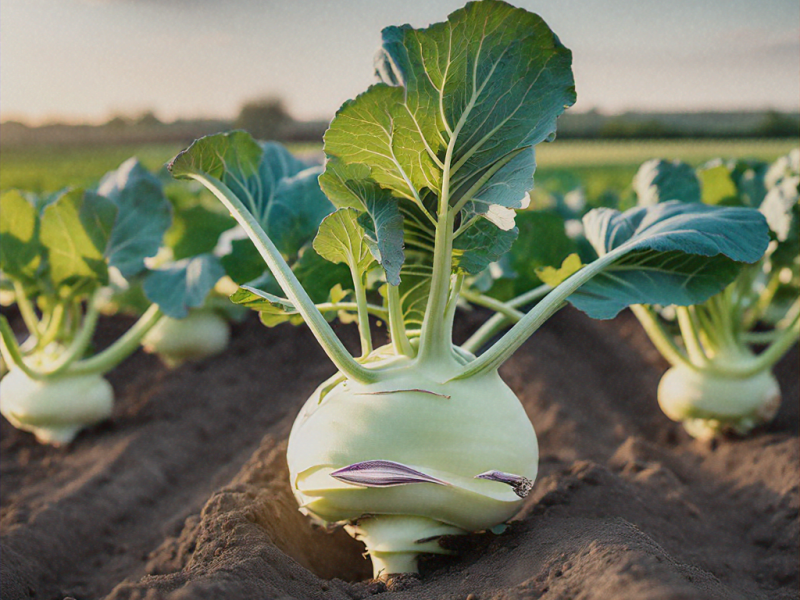
Kohlrabi, often referred to as the “German turnip,” is a member of the Brassica family, which includes vegetables such as cabbage, broccoli, and cauliflower. This unique vegetable is characterized by its swollen, globe-shaped stem that grows above the ground, with edible leaves and stems that can be prepared in a variety of ways.
Kohlrabi is not only a culinary delight but also a nutritional powerhouse. Rich in vitamins C and B, as well as minerals like potassium and calcium, this versatile vegetable offers a range of health benefits, including improved digestion, enhanced immune function, and better cardiovascular health.
Exploring Kohlrabi Varieties in Maharashtra
Maharashtra’s diverse agro-climatic conditions have given rise to a variety of kohlrabi cultivars, each with its own unique characteristics and adaptations. Some of the popular kohlrabi varieties grown in the state include:
- Early White Vienna: A fast-growing variety with a pale green to white exterior and a sweet, mild flavor. It is well-suited for early-season cultivation.
- Purple Vienna: A striking variety with a deep purple-colored exterior and a crisp, juicy interior. It is known for its distinctive appearance and robust flavor.
- Superschmelz: A large-sized kohlrabi variety that can grow up to 8 inches in diameter. It is valued for its tender, mild-tasting flesh and long storage life.
- Azur Star: A blue-green variety with a sweet, nutty taste. It is known for its versatility in culinary applications and its ability to withstand heat and drought conditions.
Farmers in Maharashtra can choose from these and other kohlrabi varieties based on their specific growing conditions, market preferences, and culinary needs.
Soil and Climate Requirements for Kohlrabi Cultivation
Kohlrabi thrives in a temperate climate with moderate temperatures and ample rainfall. Maharashtra’s diverse geography, ranging from the Sahyadri mountain ranges to the coastal regions, offers a range of microclimates suitable for kohlrabi cultivation.
The ideal soil for growing kohlrabi in Maharashtra is well-drained, rich in organic matter, and has a slightly acidic to neutral pH (6.0-7.0). Sandy loam or clay loam soils are preferred, as they provide the necessary nutrient content and moisture-holding capacity for optimal growth.
To prepare the soil, farmers should incorporate organic matter, such as well-decomposed farmyard manure or compost, into the top layer of the soil. This helps improve soil structure, water retention, and nutrient availability, creating an ideal environment for kohlrabi cultivation.
Planting and Cultivation Practices
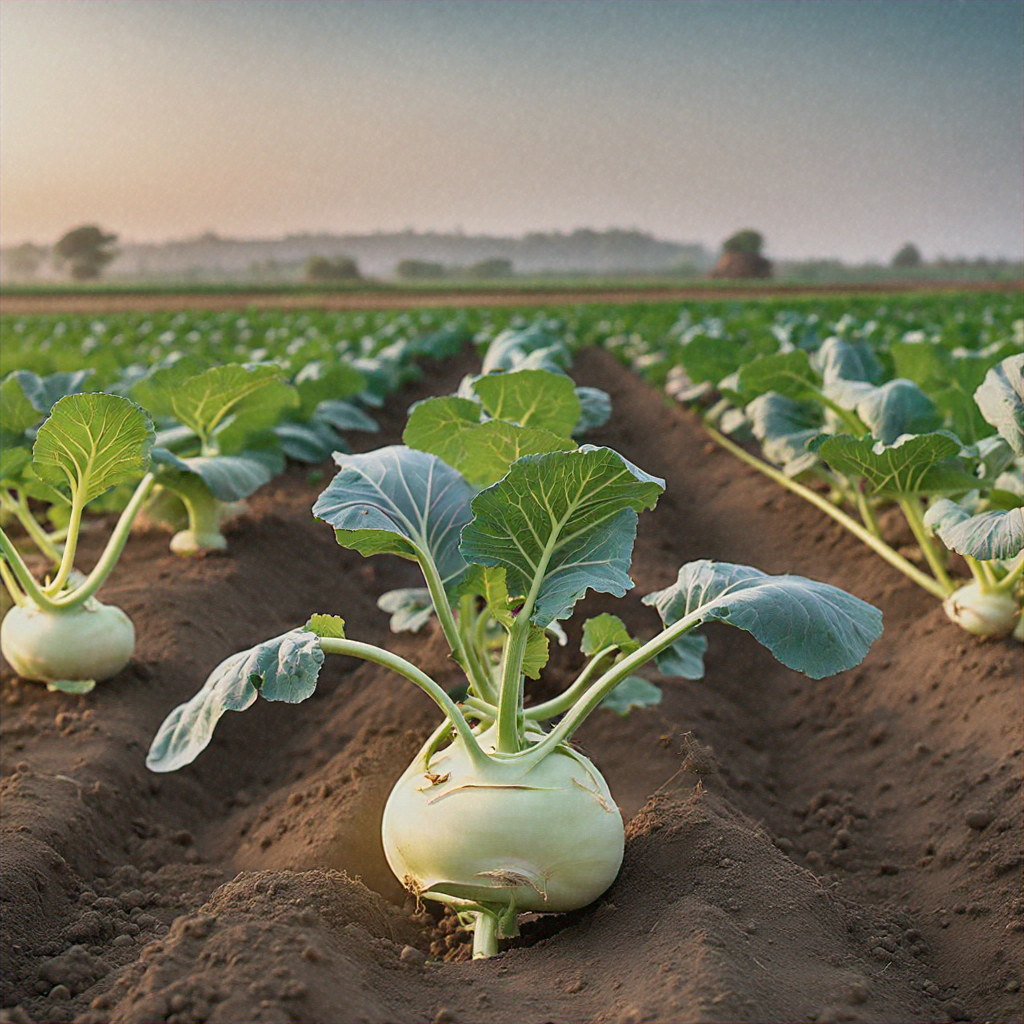
Kohlrabi can be grown throughout the year in Maharashtra, with the optimal planting seasons being the cooler months of the year, typically from September to February.
The cultivation process begins with the selection of high-quality, disease-free seeds or seedlings. Farmers can either sow the seeds directly into the prepared beds or start the seedlings in a nursery and transplant them later.
When direct sowing, the seeds should be planted at a depth of about 1-2 inches and spaced approximately 12-18 inches apart in rows, with a row-to-row distance of 18-24 inches. For transplanted seedlings, the same spacing guidelines should be followed.
Regular irrigation is crucial for kohlrabi cultivation, as the crop requires consistent soil moisture, especially during the early growth stages. Drip irrigation or sprinkler systems can be effectively utilized to ensure efficient water management and prevent waterlogging.
Weeding and timely application of organic or inorganic fertilizers are also important cultural practices. Farmers should monitor the crop for pests and diseases, and take appropriate measures to maintain the health and vigor of the plants.
Harvesting and Post-Harvest Handling
Kohlrabi is typically ready for harvest when the stem or bulb reaches 2-4 inches in diameter, usually within 50-70 days after planting. The ideal harvesting time is when the bulb is firm, crisp, and has a vibrant color.
To harvest, farmers should carefully uproot the entire plant, ensuring that the stem and leaves are intact. The leaves can be removed, leaving about 1-2 inches of the stem attached to the bulb.
Post-harvest handling is crucial to maintain the quality and extend the shelf life of kohlrabi. Immediately after harvest, the produce should be cleaned, trimmed, and stored in a cool, well-ventilated place. Refrigeration at temperatures around 32-40°F (0-4°C) and high relative humidity (95-100%) can help preserve the freshness and crispness of the kohlrabi for up to 2-3 weeks.
For longer-term storage, kohlrabi can be blanched and frozen or processed into various value-added products, such as pickles, chutneys, or dehydrated snacks. These post-harvest processing techniques not only extend the shelf life but also diversify the market opportunities for kohlrabi growers in Maharashtra.
Unlocking the Economic Potential of Kohlrabi
Kohlrabi cultivation in Maharashtra holds significant economic potential for farmers and agribusinesses alike. As consumer demand for nutritious and diverse vegetables continues to rise, both domestic and export markets offer promising opportunities for kohlrabi growers.
In the domestic market, kohlrabi is gaining popularity among health-conscious consumers, particularly in urban centers. Farmers can capitalize on this trend by supplying high-quality kohlrabi to local markets, supermarkets, and specialty stores.
Additionally, the development of value-added products, such as pickled kohlrabi, kohlrabi chips, or kohlrabi puree, can further enhance the marketability and profitability of the crop. Farmers can explore collaborations with food processing industries or develop their own value-addition strategies to diversify their income streams.</
For export markets, kohlrabi from Maharashtra has the potential to cater to the growing global demand for unique and nutritious vegetables. By adhering to international quality standards, farmers can explore opportunities in countries like the United States, European Union, and the Middle East, where kohlrabi is gaining traction among discerning consumers.
To maximize the economic benefits of kohlrabi cultivation, farmers in Maharashtra should stay informed about market trends, develop strong supply chain relationships, and explore innovative marketing strategies. Additionally, government support in the form of subsidies, extension services, and infrastructure development can further bolster the growth of the kohlrabi industry in the state.
Conclusion
Kohlrabi cultivation in Maharashtra holds immense promise for farmers and consumers alike. By understanding the unique cultivation requirements, exploring the diverse variety of kohlrabi, and adopting best practices in soil management, planting, and harvesting, farmers can unlock the true potential of this versatile vegetable.
As Maharashtra continues to lead the way in agricultural innovation and sustainable farming, the cultivation of kohlrabi stands as a testament to the state’s commitment to diversifying its crop portfolio and enhancing food security. By embracing the intelligent growth guide outlined in this article, farmers in Maharashtra can pave the way for a future where kohlrabi not only nourishes the community but also contributes to the state’s thriving agricultural economy.