

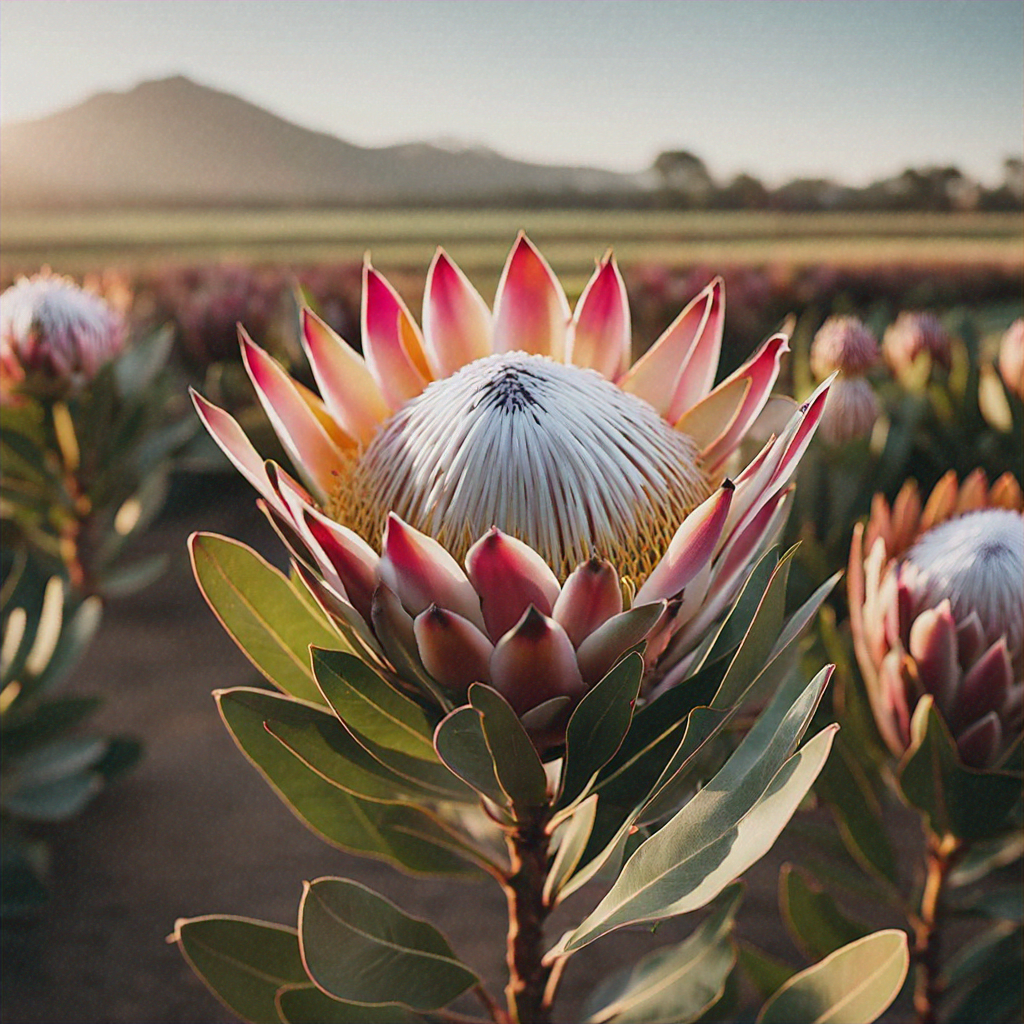
Plant Doctor & Care for King Protea – Global Guide: Step-by-Step & Yield Tips
In the vast and enchanting world of horticulture, few plants captivate the imagination as the majestic King Protea (Protea cynaroides). Native to the fynbos region of South Africa, this iconic bloom has become a beloved symbol of the country, adorning gardens, bouquets, and even the national rugby team’s emblem. As a plant doctor, I’m honored to share a comprehensive guide on the care and cultivation of this remarkable species, with a focus on ensuring its optimal growth and yield for the benefit of gardeners and agricultural enthusiasts worldwide.
Understanding the King Protea
The King Protea, often referred to as the ‘king of the proteas,’ is a stunning evergreen shrub or small tree that can reach heights of up to 5 meters (16 feet). Its most distinctive feature is the large, intricate flower head, which can measure up to 30 centimeters (12 inches) in diameter. These flower heads are composed of numerous individual florets, arranged in a captivating spiral pattern that resembles a crown, hence the plant’s regal name.
Beyond its breathtaking appearance, the King Protea is a resilient and adaptable species, thriving in a range of climates and soil conditions. Its natural habitat in the fynbos biome is characterized by hot, dry summers and mild, wet winters – a unique ecosystem that has shaped the plant’s unique adaptations and growth patterns.
Cultivation and Care: A Step-by-Step Guide
Site Selection and Soil Preparation
The first step in successfully cultivating King Proteas is to choose the right location. These plants prefer well-drained, acidic soil with a pH between 5.0 and 6.5. They thrive in full sun exposure, so selecting a spot that receives at least 6 hours of direct sunlight per day is crucial.
Before planting, prepare the soil by incorporating organic matter, such as compost or peat moss, to improve drainage and nutrient content. Avoid heavy, clay-based soils, as they can lead to root rot and other issues.
Planting and Transplanting
When planting King Proteas, it’s essential to handle the delicate root system with care. Gently remove the plant from its container, being cautious not to damage the roots. Dig a hole that is twice the width of the root ball and plant the protea at the same depth as it was growing in the container.
If transplanting an established King Protea, choose a time of year when the plant is not actively growing, such as late fall or early spring. Carefully dig around the root ball, ensuring that it remains intact, and replant the protea in a well-prepared hole.
Watering and Fertilizing
King Proteas have specific watering needs. In their native habitat, they experience a distinct dry season, followed by a rainy period. Mimic this pattern by providing regular, deep watering during the growing season and allowing the soil to dry out slightly between waterings.
Fertilize your King Proteas with a balanced, slow-release fertilizer formulated for acid-loving plants. Apply the fertilizer in early spring, following the manufacturer’s instructions closely. Avoid over-fertilizing, as this can lead to excessive foliage growth at the expense of flower production.
Pruning and Shaping
Proper pruning is essential for maintaining the health and shape of your King Protea. Prune the plant immediately after flowering, using clean, sharp pruning shears to remove any dead, damaged, or crossing branches. This will encourage new growth and help the plant maintain its signature shape.
When pruning, be mindful of the plant’s growth pattern. King Proteas naturally grow with a single, upright stem, so avoid cutting back the main stem, as this can inhibit the plant’s development.
Pest and Disease Management
King Proteas are generally quite hardy, but they can be susceptible to certain pests and diseases. Common issues include aphids, scale insects, and fungal diseases like Phytophthora root rot.
To prevent and manage these problems, practice good sanitation habits, such as regularly inspecting the plant for signs of infestation or infection and removing any affected parts. If necessary, use targeted, eco-friendly pest control or fungicide products, always following the manufacturer’s instructions carefully.
Maximizing Yield and Propagation
Flower Production and Harvesting
One of the primary reasons gardeners and farmers cultivate King Proteas is for their stunning, long-lasting flowers. To ensure a robust and consistent bloom, pay close attention to the plant’s growing conditions and maintenance practices.
Encourage flower production by providing the plant with ample sunlight, well-drained soil, and proper fertilization. Prune judiciously to maintain the plant’s shape and stimulate new growth, which will ultimately lead to more flower buds.
When the flowers are in full bloom, they can be harvested for use in cut flower arrangements or for commercial sale. Carefully cut the flower heads, leaving a long stem attached, and condition them by placing the stems in water.
Propagation and Cultivation Techniques
King Proteas can be propagated through several methods, including seed sowing, cuttings, and division. Seed propagation is the most common technique, as it allows for the production of a large number of plants.
- Seed Sowing: Collect ripe seed heads from your mature King Proteas and sow the seeds in a well-draining seed-starting mix. Cover the seeds lightly and keep the soil consistently moist until germination occurs, which can take several weeks.
- Cuttings: Take semi-hardwood cuttings from the plant in late summer or early fall. Treat the cuttings with a rooting hormone and plant them in a well-draining potting mix, keeping them consistently moist until they root.
- Division: For established plants, carefully divide the root ball, ensuring that each division has a portion of the main stem and roots. Replant the divisions in well-prepared soil.
Regardless of the propagation method, provide the young King Proteas with ample moisture, protection from direct sunlight, and a nutrient-rich growing medium to ensure their successful establishment and growth.
Adapting for Global Cultivation
While the King Protea is native to South Africa, its cultivation has expanded worldwide, with growers in various climates and regions successfully cultivating this remarkable plant. By understanding the species’ adaptability and making appropriate adjustments to the growing conditions, gardeners and farmers can enjoy the beauty and rewards of these iconic flowers.
In regions with hot, dry summers and mild, wet winters similar to the fynbos biome, the King Protea can thrive with minimal modifications to the care regimen outlined above. However, in areas with more extreme temperatures, precipitation patterns, or soil conditions, growers may need to make adjustments to ensure the plant’s success.
For example, in cooler climates, growers may need to provide additional winter protection, such as insulating the root zone or moving potted plants indoors. In humid, tropical regions, extra precautions may be necessary to prevent fungal diseases. And in areas with alkaline soils, amending the soil with acidic materials can help maintain the plant’s preferred pH range.
By closely monitoring the plant’s growth and adaptation to the local environment, as well as experimenting with various cultivation techniques, growers around the world can unlock the full potential of the King Protea, bringing its beauty and bounty to a global audience.
Conclusion
The King Protea is a horticultural marvel, captivating gardeners and agricultural enthusiasts worldwide with its striking appearance and resilient nature. As a plant doctor, I’m honored to share this comprehensive guide on the care and cultivation of this iconic bloom, empowering readers to unleash the full potential of this remarkable species.
By following the step-by-step instructions, optimizing growing conditions, and adopting sustainable propagation techniques, gardeners and farmers can enjoy the beauty and bountiful yields of the King Protea, contributing to the overall human welfare and appreciation for the natural world. As we continue to explore and master the art of cultivating this extraordinary plant, the global community can revel in the splendor of the ‘king of the proteas’ for generations to come.
👥 Readers added context they thought people might want to know
Agri-X Verified PunjabFarmer_01
✔
PunjabFarmer_01
✔
Current formatting suggests planting in June. However, 2025 IMD data confirms delayed monsoon. Correct action: Wait until July 15th for this specific variety.
Have a correction? Log in to contribute.